



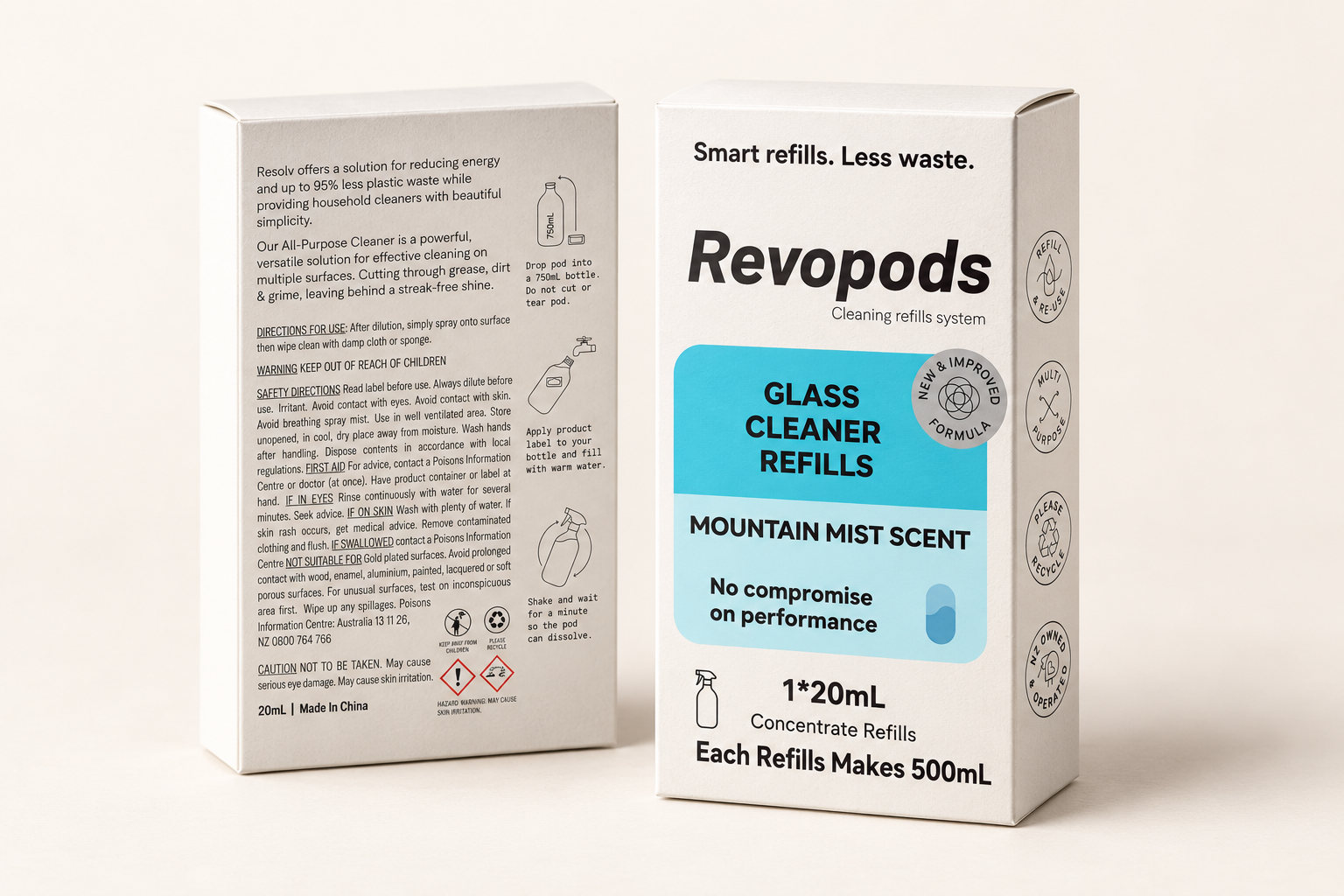
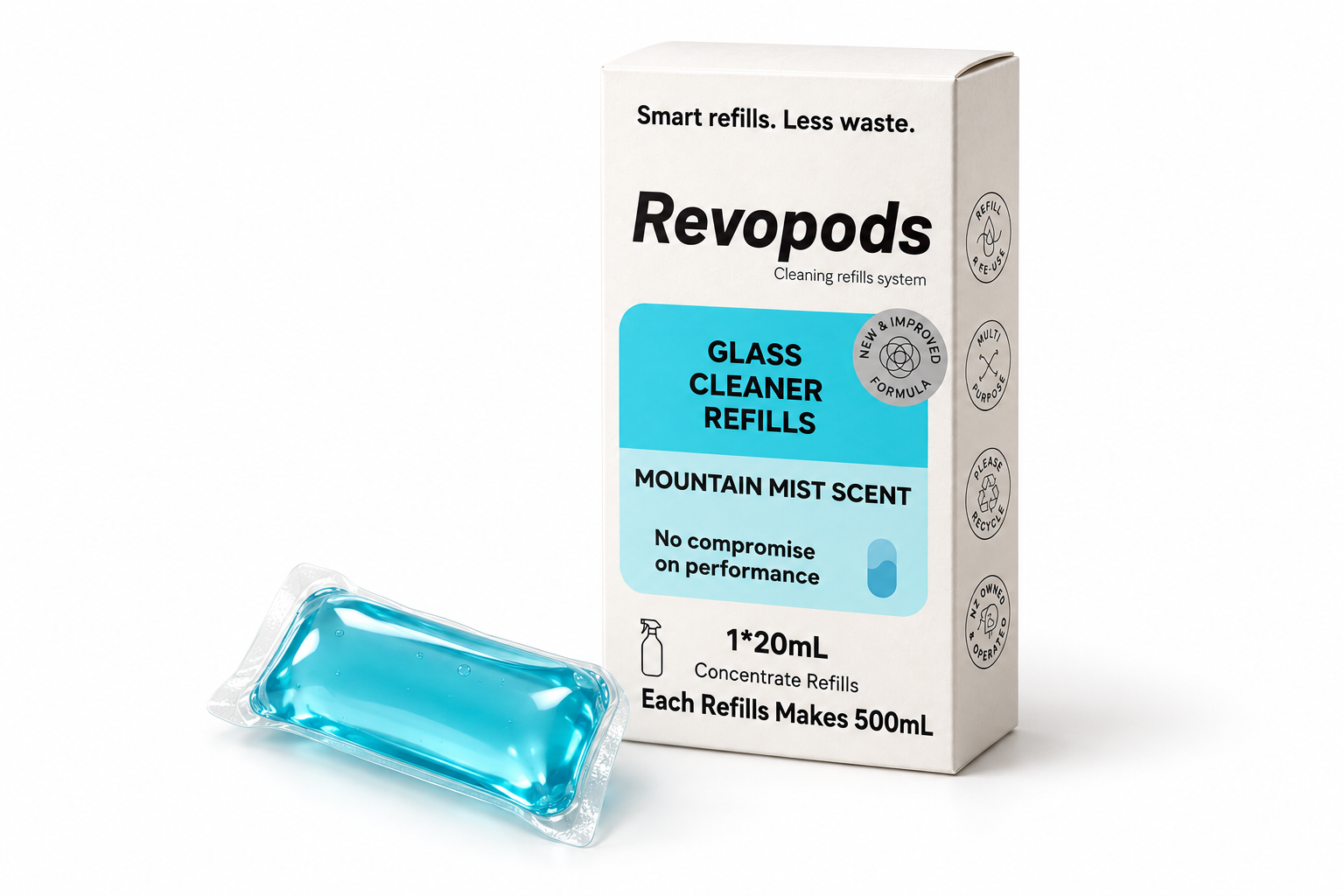
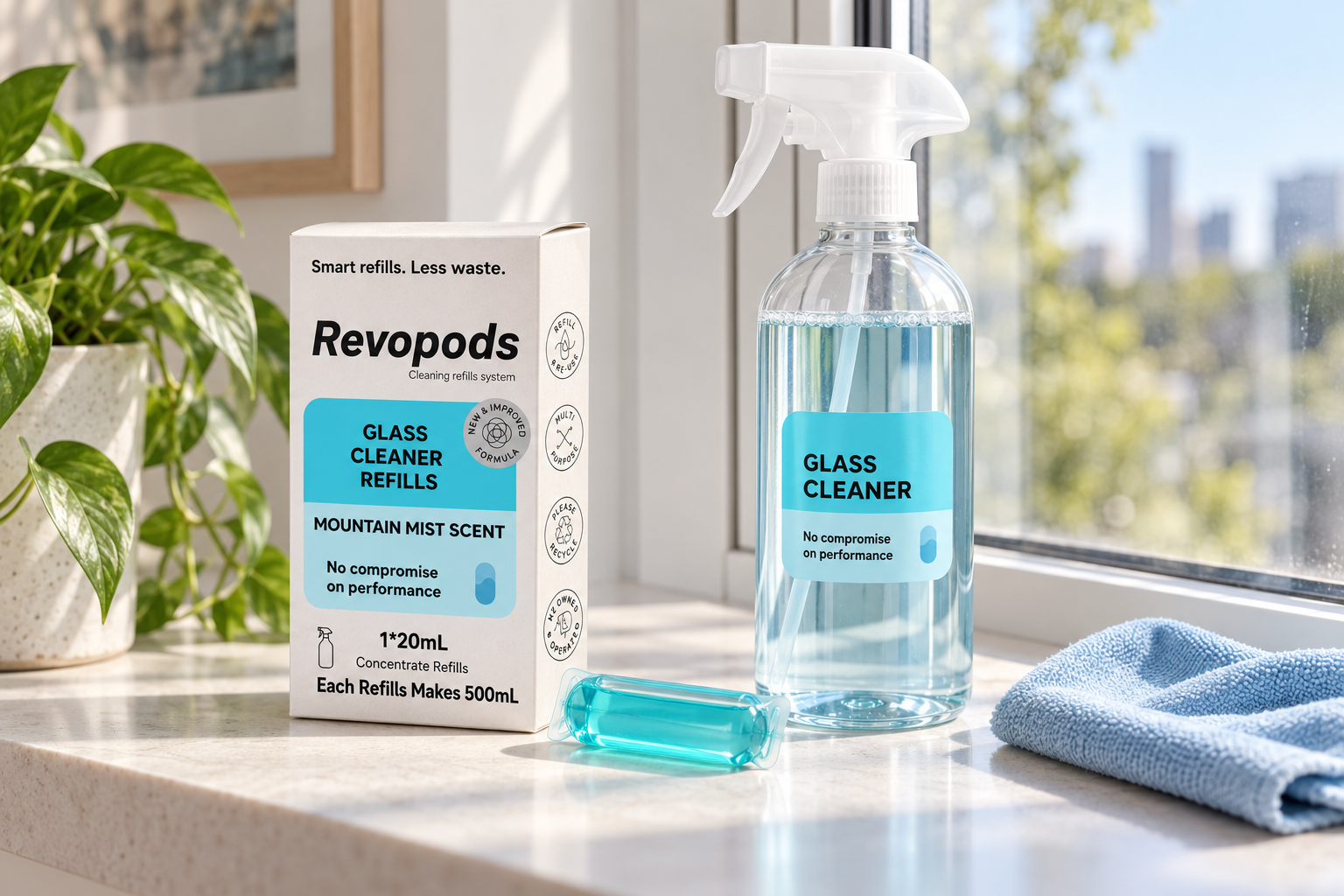
Glass Cleaner Concentrate Refills
Low-VOC design · clear, streak-free glass
One 20 ml refill pod makes 500 ml of glass cleaner.
Made for windows, mirrors and compatible glass surfaces. A controlled dose combines hexylene glycol, a high-molecular-weight polymer and a chelating agent to lift fingerprints and surface film while helping the diluted cleaner wipe away without visible streaks or water marks. The solvent strategy is designed to keep VOC content low in the finished, ready-to-use formula.
Refill the Cleaner. Reuse the Spray Bottle.
A smarter way to keep glass and mirrors clear
Revopods separates the glass-cleaning concentrate from the water and the reusable spray bottle. One pre-measured 20 ml refill pod makes 500 ml of ready-to-use cleaner.
Its low-VOC formulation approach targets fingerprints, smudges and airborne film without relying on a highly volatile alcohol-heavy cleaning system. The compact refill reduces the amount of ready-to-use liquid shipped with every repeat purchase.
Pre-measured 20 ml Dose
500 ml Reusable Spray Bottle
Compact Refill Format
Clear Glass, Without the Water Marks
A targeted combination of hexylene glycol, polymer and chelating agent is designed to remove everyday smudges and reduce visible streaking or mineral-related water marks after wiping. Results depend on surface condition, water quality and cloth selection. Validate the final diluted formula on relevant glass and mirror surfaces.
Fingerprints & Smudges
Streak-Free Wipe
Water-Mark Control
One 20 ml Pod Makes 500 ml
Four simple steps for a consistently diluted glass cleaner and a clear finish.
01 · Fill
02 · Drop
03 · Dissolve
04 · Clean
Formula, Film and Bottle Work as One System
Active Content Delivery System
01 · Low-VOC cleaning concentrate
A pre-measured 20 ml dose combines hexylene glycol with a surface-active cleaning system while targeting low VOC content in the 500 ml ready-to-use solution.
02 · Polymer and chelator
The high-molecular-weight polymer supports controlled wetting and wipe-off; the chelating agent manages hard-water ions to help limit visible deposits.
03 · Film and reusable bottle
The water-soluble film holds the concentrate until mixing; a compatible 500 ml trigger bottle provides repeatable dilution and fine spray application.
The formula, water quality, dilution, bottle, spray pattern and cloth should be tested together for VOC content, residue, cleaning and surface compatibility.
Designed as a Complete Glass Cleaner Refill System
The 20 ml glass-cleaner pod, reusable 500 ml spray bottle and retail pack form one coherent refill system. Its compact format and reusable bottle can help reduce repeated packaging and transport of water compared with buying another ready-to-use spray bottle.
Private-label projects may define the cleaning profile, mountain mist scent, tint, pod appearance, pack configuration, spray bottle and artwork together.
Low-VOC, streak-free, no-water-mark and environmental claims require evidence from the exact commercial formula, dilution water, packaging and target market. Ingredient choice or refill format alone does not establish environmental certification.
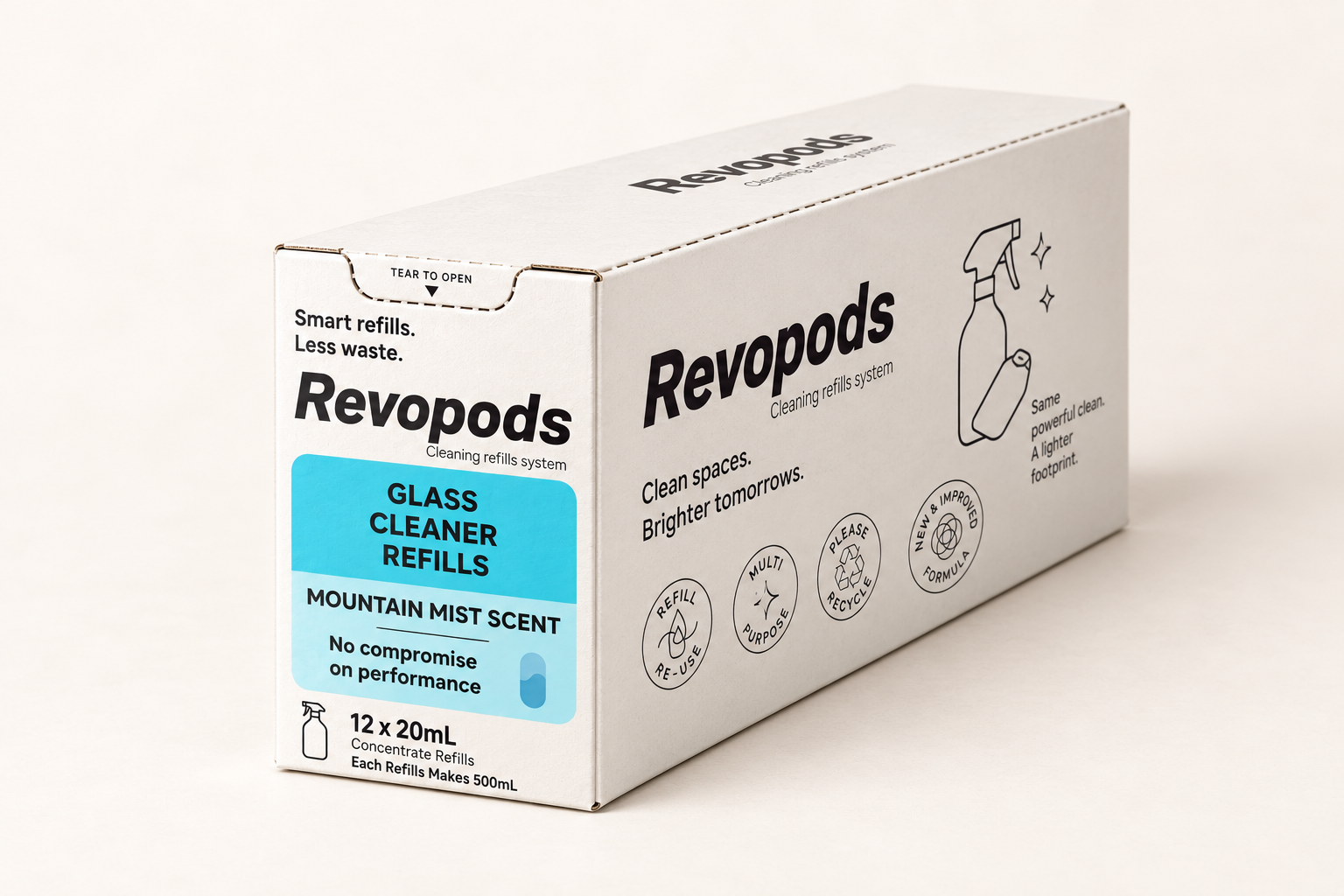
Glass Cleaner Product Details
Formula role | Purpose in the glass cleaner |
|---|---|
Hexylene Glycol (2-Methyl-2,4-pentanediol) | Supports solvency, wetting and controlled drying as part of the low-VOC solvent strategy. It is an organic ingredient; the final VOC value must be measured or calculated under the target-market definition. |
High-Molecular-Weight Polymer | Helps tune the spread and wipe-off behaviour. The grade and use level must be optimised to avoid visible residue or haze. |
Chelating Agent | Binds metal ions from dilution water to help limit mineral deposits and water marks. |
Surface-Active Cleaning System | Wets glass and lifts fingerprints, light oily soils and everyday surface film while controlling residue. |
pH-Control System | Supports formula stability, cleaning performance and compatibility with the approved surface scope. |
Fragrance / Colour | Mountain Mist scent and turquoise appearance where included in the approved commercial formula; fragrance choices affect VOC and environmental assessments. |
Preservative System | Supports intended storage and use-life under validated conditions. |
Hexylene glycol is the standard English name for 异己二醇 (CAS 107-41-5). Confirm the precise polymer, chelator, ingredient declaration and finished-product data against the approved formulation.
| Product type | Glass cleaner concentrate refill |
|---|---|
| Concentrate dose | 1 × 20 ml pod |
| Dilution | 1 pod to a 500 ml labelled bottle; follow the approved fill-line instructions |
| Application | Compatible windows, mirrors and uncoated glass surfaces |
| Cleaning profile | Fingerprints, smudges, light oils and routine surface film |
| Finish | Designed to minimise visible streaks and water marks; confirm by surface and water-quality testing |
| VOC approach | Low-VOC formulation target; publish a quantitative claim only after testing against the target-market definition |
| Key formula roles | Hexylene glycol, high-molecular-weight polymer and chelating agent |
| Scent | Mountain Mist |
| Pack options | Single-pod retail carton, three-pod zipper pouch, shelf-ready tray and bottle starter kit by project |
| Storage | Keep in the original moisture-resistant pack in a cool, dry place |
| Handling | Use dry hands; do not cut or pierce the pod; follow the approved label and safety documentation |
Will it leave streaks or water marks?
The formula is designed for clear wipe-off. Mineral content in tap water, a dirty cloth or overapplication can change the result. Use a clean lint-free cloth and consider low-mineral water in hard-water areas.
What makes the formula low VOC?
The solvent system is designed to limit VOC content in the diluted cleaner without relying on an alcohol-heavy formulation. Hexylene glycol is still an organic ingredient. The finished formula must be checked against the VOC definition and limits in the market where it is sold.
How do the polymer and chelator help?
The polymer is selected for controlled spreading and wipe-off; the chelator helps manage minerals introduced with dilution water. Their grades and use levels need validation to prevent haze or residue.
Which surfaces can I clean?
Use only on surfaces covered by the validated commercial label. Test sensitive coatings, films, tinted glass, screens and decorative finishes according to the surface maker’s instructions.
Is it environmentally certified?
The refill format and reusable bottle can reduce repeated water transport and packaging. Any wider environmental or certification claim requires assessment of the full formula, film, bottle and pack.
Can it be made for private label?
Yes. Formula profile, scent, tint, pod appearance, bottle selection and retail or SRT packaging can be developed for a project brief.


